Restaurants and Food Service
Restaurant Cleaning in Minneapolis
Kitchen, dining room and restroom cleaning scheduled around service, for restaurants, cafes, bars and food service operations across Minneapolis.
Overview
What a Busy Close Leaves Behind
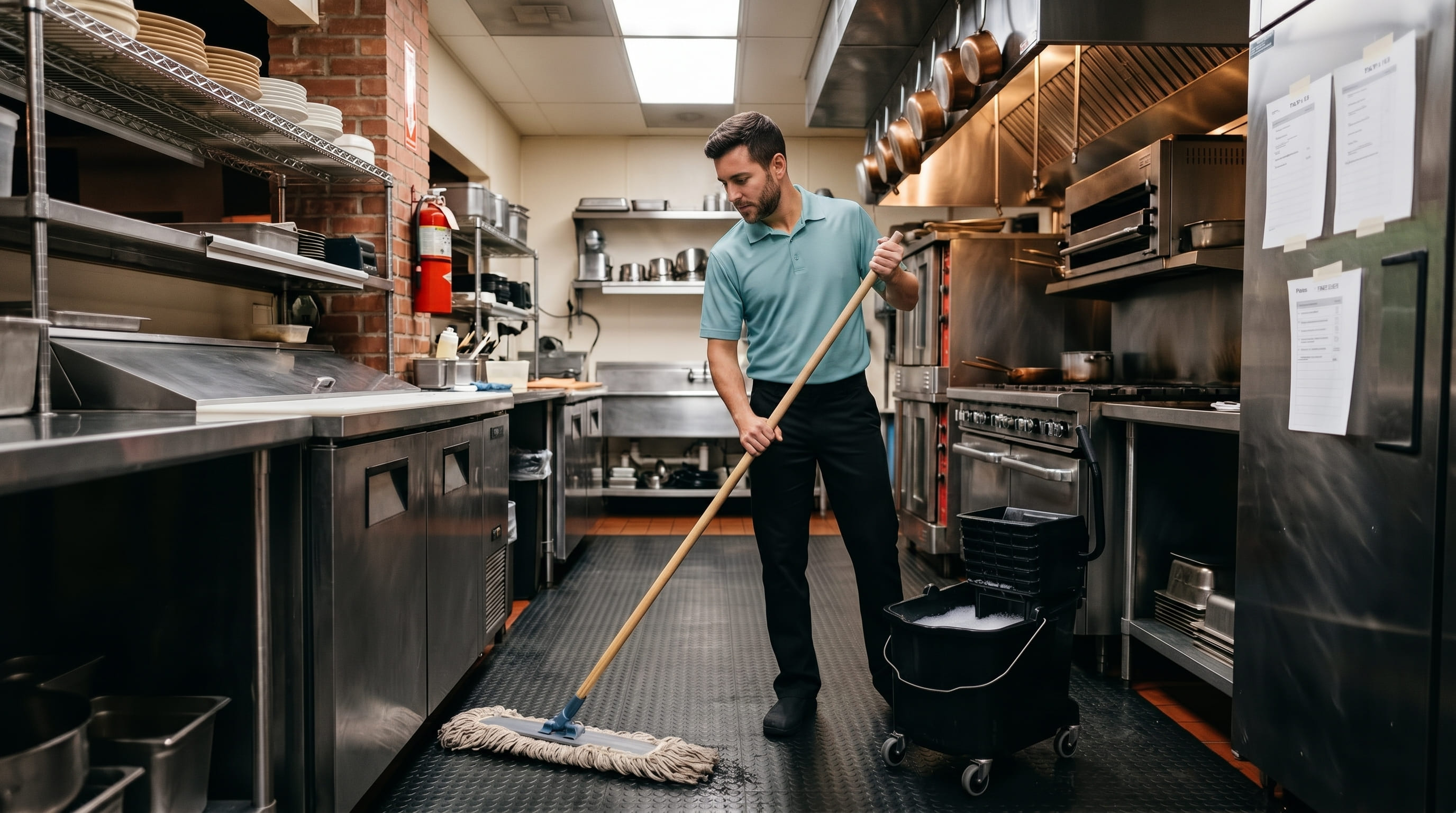
At the end of a busy dinner service, the visible kitchen can look reset while the building is still carrying the shift. Grease has settled at the cook-line wall, food debris has collected around equipment feet, and water in the floor drains has started to hold an odor. By the next prep shift, those missed areas affect more than appearance: staff work around a dirty floor, odors reach the dining room, and a routine inspection can expose work that never made it onto the closing checklist.
Minneapolis Janitorial builds restaurant cleaning around the places a fast close leaves behind. We schedule kitchen, dining room, bar, and restroom work around service and prep, then set separate frequencies for the deep tasks that cannot fit into a nightly reset. The written scope can include cook-line degreasing, grout and drain attention, equipment-gap detail, front-of-house floor care, and restroom recovery. The purpose is practical: give the operator a clear standard, give the crew a repeatable sequence, and keep the restaurant ready for the next shift rather than merely presentable at lockup.
Scope of Work
What a Restaurant Cleaning Program Covers
Restaurant cleaning has to protect two operating conditions at once: the back-of-house areas where grease, moisture, and food debris accumulate, and the guest spaces where floors, restrooms, and entry glass shape the visit. Minneapolis Janitorial scopes both by area and frequency. The program separates regular service from periodic drain, grout, equipment-gap, and floor work, so responsibilities do not get lost between closing staff and a cleaning crew.
- Degreasing of hood surrounds, backsplashes and cook line walls
- Cleaning behind and beneath fryers, ranges and prep tables
- Floor drain flushing, scrubbing and odor treatment
- Deep scrubbing of quarry tile and grout lines in kitchen areas
- Stainless steel prep surface cleaning and polishing
- Walk-in cooler and freezer floor and shelving cleaning
- Dish pit floor, wall and splash-zone degreasing
- Mop sink and janitorial closet cleaning and reset
- Trash and recycling area cleaning, liner change and deodorizing
- Dumpster corral pad wash-down and debris removal
- Dining room floor sweeping, mopping and periodic machine scrubbing
- Booth, banquette and chair base wiping and detail vacuuming
- Table base, rail and high-touch surface disinfection
- Host stand, waiting area and entry glass cleaning
- Bar top, speed rail exterior and bar floor mat cleaning
- Beverage station and soda gun area cleaning
- Restroom fixture disinfection, restocking and floor scrubbing
- Baby changing station cleaning and disinfection
- Entry mat service and seasonal salt and grit removal
- Light fixture, vent grille and ceiling tile dusting on a periodic cycle
Our Approach
How We Run a Restaurant Cleaning Account
Restaurant service leaves the same predictable pressure points night after night: cook-line grease, equipment gaps, drains, restroom traffic, and floors that need to be ready before the next prep shift. Minneapolis Janitorial turns those pressure points into a written sequence. We set what is handled during regular service, what belongs on a periodic cycle, and how the completed work is checked, so the standard does not depend on a manager remembering every hidden area after a long close.
Walk the Line at Close
We tour the kitchen and dining room during or just after service so we see the building at its dirtiest rather than at its cleanest. This is the only reliable way to scope grease load, drain condition and floor wear accurately.
Separate Nightly From Periodic
Your scope splits daily closing support from the periodic degreasing, grout scrubbing and deep floor work that only matters on a cycle. Both are written down with frequencies so there is no argument about what was included.
Work Around Your Service Hours
Crews arrive after close or before prep, whichever fits your operation, and finish before your kitchen staff return. Nobody is cleaning around a working line or blocking a walkway during service.
Inspect the Places Inspectors Check
Supervisors verify drains, grout, equipment gaps, hood surrounds and restroom detail against the written scope. These are the failure points in a health inspection, so they are the ones we check first.
Adapt to Menu and Volume Changes
A new fryer, a patio opening or a seasonal volume swing changes your cleaning load. Tell us and the scope is revised in writing rather than absorbed silently until standards slip.
Benefits
What Restaurant Operators Get From the Program
For a restaurant operator, a clear cleaning scope protects the next service as much as it improves the last one. The useful outcomes are concrete: less time pushed onto closing staff, fewer avoidable odor and buildup issues, guest areas that match the care taken in the kitchen, and a documented plan for the detailed work that does not fit into an ordinary shift.
Inspection-Ready as a Baseline
Drains, grout, hood surrounds and equipment gaps are handled on a defined cycle rather than in a panic before a visit. The building is in inspection condition on an ordinary Wednesday.
Your Closing Staff Get Their Night Back
When the deep work belongs to a cleaning crew, your team closes on time. That has a direct effect on labor cost and on how long good staff stay with you.
Pest Pressure Reduced at the Source
Grease, food debris and standing moisture in drains are what draw pests into a kitchen. Removing them consistently does more than treating the symptom after the fact.
Front of House That Matches the Kitchen
Guests judge your food safety by the restroom and the dining room floor, because those are the only parts of your operation they can see. Both are held to the same standard as the line.
More Facility Types
Other Industries We Clean in Minneapolis
Request a Quote
Get a Restaurant Cleaning Scope Built Around Your Kitchen
Every kitchen carries a different grease load, a different floor system and a different service rhythm, so a quote written from square footage tells you nothing useful. We will walk your restaurant after service, look at the drains, grout, hood surrounds and dining room, and write a program that separates nightly work from the periodic degreasing your building actually needs. You will get frequencies in writing, a crew that returns to your restaurant rather than a rotating cast, and a schedule that finishes before your prep team arrives. Call (612) 712-8785 to arrange a walkthrough at a time that works around your service.