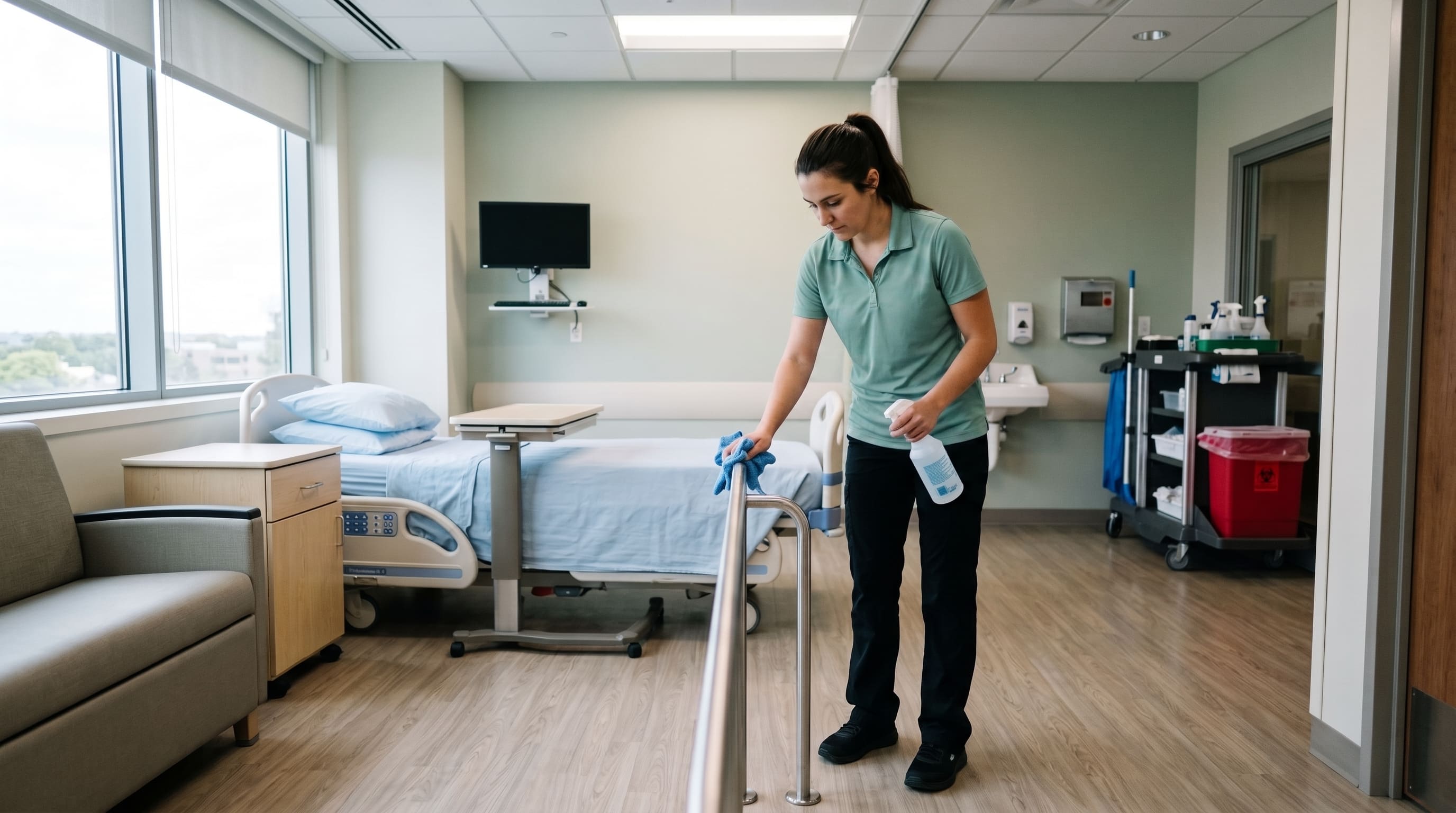
Medical and Healthcare
Medical and Healthcare Facility Cleaning in Minneapolis
Infection-control focused cleaning for clinics, medical offices, dental practices, therapy centers and specialty care facilities across Minneapolis.
Overview
The Hidden Failure in an Otherwise Tidy Clinic
A clinic can look orderly at closing and still have a cleaning process problem. A treatment-room surface may be wiped before the product has time to work, a cloth used in a public area may be carried into a clinical room, or a rushed sequence may leave the next staff member unsure what was actually addressed. Those failures are easy to miss in a visual walkthrough, but they create avoidable uncertainty for the people responsible for room readiness and infection-control procedures.
Minneapolis Janitorial approaches medical and healthcare facility cleaning as a documented, zone-based service. We start by separating clinical, public, staff, and restroom areas, then build the task sequence and material controls around that layout. The scope can set product-use instructions, assigned materials, exam-room and waiting-area tasks, floor care, and waste-area cleaning that follows the facility’s own protocols. The goal is not a generic claim of being thorough. It is a cleaning process your facility can understand, review, and use alongside its operating requirements.
Scope of Work
What a Healthcare Cleaning Program Covers
A medical facility contains different cleaning environments under one roof, and a single undifferentiated routine can create avoidable gaps. Minneapolis Janitorial scopes clinical rooms, public waiting areas, staff spaces, and restrooms by task, material, and sequence. The written program distinguishes daily cleaning from periodic work and aligns the service with the facility’s own waste, privacy, and access procedures.
- Exam room surface disinfection with observed contact times
- Treatment table, chair and stool disinfection
- Color-coded microfiber use separating clinical and public areas
- Disinfection of counters, cabinet fronts and drawer pulls
- Sink, faucet and dispenser cleaning in clinical rooms
- Hand sanitizer and soap dispenser checks and restocking
- Waiting room seating, arm rest and shared surface disinfection
- Reception counter, check-in kiosk and pen station cleaning
- Children's play area surface disinfection where present
- Restroom disinfection, restocking and floor scrubbing
- Hard floor damp mopping with hospital-grade products
- Carpet vacuuming with HEPA filtration where specified
- Corridor floor care and handrail disinfection
- Door hardware, push plate and light switch disinfection
- Nurse station and charting area surface cleaning
- Break room and staff lounge cleaning and reset
- Waste collection following facility segregation protocols
- Sharps container area cleaning around, not inside, the container
- Entry glass, vestibule and mat service with seasonal grit removal
- Periodic high dusting, vent grille cleaning and floor restoration
Our Approach
How We Process a Healthcare Facility
Medical facility cleaning requires a sequence that remains clear after the crew leaves. Minneapolis Janitorial maps the zones, uses the facility’s requirements to guide materials and access, and assigns tasks in a documented order. That approach helps prevent public-area routines from crossing into clinical spaces and gives the facility a practical reference for how environmental cleaning is being handled.
Map the Clinical Zones
We walk the facility and identify which rooms are clinical, which are public and which are staff-only. The zoning drives the entire program because it determines materials, products and cleaning sequence.
Document the Procedure
Each zone receives a written procedure covering products, contact times and task order. Documentation is what makes a healthcare cleaning program defensible when someone asks how a room is actually processed.
Train the Assigned Crew
The crew working your facility is trained on the zoning, the color-coding system and the reasoning behind the sequence. Understanding why the order matters is what keeps the process intact on a busy night.
Control Cross-Contamination
Color-coded materials, one-direction workflow and separate equipment keep restroom and clinical work from ever meeting. This is the single most important control in a medical cleaning program.
Inspect and Record
Supervisors verify the work against the documented procedure and address gaps directly with the crew. Consistent inspection is what keeps a documented process from becoming a document nobody follows.
Benefits
What Clinic Managers Get From the Program
A zone-based medical cleaning program gives clinic managers a clearer operating picture. Clinical and public spaces receive separate attention, waiting areas support a clean first impression, and the scope makes it easier to discuss room readiness and environmental cleaning with the people responsible for the facility. The benefit is control through a defined process, not a vague promise of extra care.
A Process You Can Describe to an Inspector
Written procedures, defined zoning and color-coded materials give you a straightforward answer when someone asks how your exam rooms are cleaned.
Cross-Contamination Controlled by Design
Separation between clinical, public and restroom materials is built into the workflow rather than left to a crew member's judgment at the end of a long shift.
Waiting Areas That Reassure Patients
Patients evaluate clinical safety through the waiting room and restroom, because those are the spaces they can actually assess. Both are held to a visible standard.
Clinical Staff Focused on Patients
When environmental cleaning is handled properly by a trained crew, your nurses and medical assistants are not absorbing it between appointments.
More Facility Types
Other Industries We Clean in Minneapolis
Request a Quote
Discuss a Cleaning Program for Your Minneapolis Clinic
Medical facilities need a cleaning contractor who can explain their process, not just quote a price per square foot. We will walk your clinic, map the clinical, public and staff zones, and write a documented program covering products, contact times, color-coding and task sequence for each area. You will get a crew trained specifically on your facility's zoning, supervision that verifies work against the written procedure, and a program that supports your own infection-control obligations rather than complicating them. Call (612) 712-8785 to arrange a walkthrough outside of patient hours.